All published articles of this journal are available on ScienceDirect.

A Systematic Review of Malyugin Rings in Cataract Surgery: Surgical Outcomes, Efficacy and Safety
 Fahad Butt1 , #
Jun Bo Wang1
Emma Anwar2
Amit X. Garg3 , 4
Cindy M. L. Hutnik5 , 6
Monali S. Malvankar-Mehta1 , 3 , 5 , *
Fahad Butt1 , #
Jun Bo Wang1
Emma Anwar2
Amit X. Garg3 , 4
Cindy M. L. Hutnik5 , 6
Monali S. Malvankar-Mehta1 , 3 , 5 , *
Authors Info & Affiliations
Abstract
Introduction
Small pupils complicate cataract surgery and increase intraoperative risk. The Malyugin ring is a widely used mechanical pupil-expansion device lacking a comprehensive evidence synthesis. This review evaluated its efficacy and safety in adults.
Methods
A total of 4 databases (EMBASE, MEDLINE, CINAHL Plus, Web of Science) were searched from inception to October 21, 2024, with an updated search conducted on June 28, 2025. Randomized and observational studies involving adults undergoing cataract surgery with a Malyugin ring were eligible. The outcomes included dilation adequacy, surgical duration, intraoperative complications, endothelial cell loss, and visual acuity. Risk of bias was assessed using RoB 2 and ROBINS-I, and the certainty of evidence was evaluated using GRADE. A narrative synthesis was performed in accordance with PRISMA guidelines (PROSPERO CRD420251069562).
Results
Altogether 10 studies (3,233 eyes) were included. The Malyugin ring provided stable dilation (5.5–7.0 mm) in small pupils and in patients with pseudoexfoliation syndrome. Relative to iris hooks and manual stretching, it was associated with shorter phacoemulsification time (15.2 vs. 19.8 s) and lower endothelial cell loss (9.35% vs. 13.77%). The visual outcomes were favorable, although some studies reported higher rates of iris tears and pupil ovalization compared with those observed with comparator techniques.
Discussion
These findings suggest advantages in surgical efficiency and early visual recovery. However, the evidence comprises 2 randomized and 8 non-randomized studies with risk of bias ranging from low to serious, and no outcomes could be pooled; therefore, comparative conclusions remain tentative.
Conclusion
The Malyugin ring appears effective and generally safe in adult cataract surgery; reported complications were typically not visually significant. Certainty of evidence was low to very low (GRADE), and superiority over alternative devices is not established.
1. INTRODUCTION
Cataracts are among the most common causes of remediable blindness, characterized by opacification of the lens. According to World Health Organization data, more than 22 million people in the United States alone had cataracts in 2013 [1, 2]. When visual function is impaired, cataract surgery constitutes one of the most effective treatments available and is associated with improvements in visual acuity, activities of daily living, and reduced mortality [2].
Although cataract surgery is highly effective, it is not without challenges. Specifically, the presence of small pupils (SPs) poses significant difficulty for the procedure. A SP restricts the area within which the surgeon can operate and increases the chances of damaging the pupillary or capsular edge with surgical instruments [3]. Small pupils are also associated with increased intraoperative complications such as posterior capsule rupture (PCR) [4, 5].
There are many methods to achieve adequate pupil dilation, ranging from pharmacologic iris dilation and surgical techniques to mechanical iris expansion. One of the established mechanical dilation devices is the Malyugin ring [6, 7]. It is a single-use, disposable polypropylene ring developed by Dr. Boris Malyugin (Moscow, Russia) and has been reported to offer several advantages. These include reduced trauma to the eye owing to its distributed stretching and gentle holding mechanism, reliable positioning provided by the equidistant loops of the ring, and the absence of any risk of iris aspiration [7]. The Malyugin ring has been reported as an effective tool for managing small pupils in the context of FLACS and intraoperative floppy-iris syndrome [5, 8]. Malyugin rings have also been reported to reduce intraoperative corneal endothelial cell loss, maintain a more stable pupil opening, and offer faster and easier use than iris hooks [9-11]. On the other hand, some studies have reported that Malyugin rings are associated with a higher rate of iris tears than iris hooks and cause significantly greater pupillary distortion in the postoperative period than other mechanical dilation devices, such as the B-HEX ring [3, 12]. Despite the growing body of evidence, there is currently no comprehensive synthesis of data evaluating the outcomes, benefits, and limitations of the Malyugin ring compared with other pupil-dilation methods in cataract surgery.
This systematic review aims to evaluate existing evidence on the use of the Malyugin ring in cataract surgery, providing clinicians and researchers with evidence-based guidance on its optimal use and addressing questions about its efficacy, safety, and comparative performance.
2. METHODS
2.1. Study Design
This systematic review was registered with PROSPERO (registration number: CRD420251069562) and abides by the Preferred Reporting Items for Systematic Reviews and Meta-Analyses (PRISMA) checklist [13]. A PICOT framework was developed for the review (Supplementary Table 1), with a focus on an adult patient population undergoing cataract surgery with Malyugin rings as a dilating agent.
2.2. Search Strategy
A systematic literature search was conducted in 4 electronic databases: EMBASE (Ovid), MEDLINE (Ovid), CINAHL Plus (EBSCO), and Web of Science, from inception to October 21, 2024. Complete, verbatim search strategies for all 4 databases are provided in Supplementary Table 2a–2d. All records were uploaded to Covidence® for screening. No restrictions on year of publication, study design, or language were applied at the search stage; publication year and language were applied only as eligibility criteria at full-text screening. In addition to the 4 databases, the reference lists of all included studies and relevant reviews were hand-searched for further eligible records (none were identified). The search was updated on June 28, 2025, and no additional eligible studies were identified.
2.3. Study Selection
Studies were eligible if they were written in English, published after 2000, and involved adult patients undergoing cataract surgery in which the Malyugin ring was used as a pupil-expansion device. Eligible designs were randomized controlled trials (RCTs) and observational studies. To be included, studies had to report at least one relevant outcome, such as pupil dilation (measured by pupil diameter), duration of mydriasis, adverse effects (e.g., cardiovascular side effects, increased intraocular pressure), or intraoperative and postoperative complications.
Studies were excluded if they involved pediatric patients or individuals with contraindications to Malyugin rings or other mydriatic agents. Case reports, commentaries, reviews, and studies without comparison groups were also excluded, as were studies that failed to report relevant outcomes or provided insufficient data for extraction.
Titles and abstracts were screened independently and in duplicate by two reviewers (SA, FB) using Covidence. Full texts were then assessed independently and in duplicate by the same two reviewers, with reasons for exclusion recorded (language, population, study design, intervention, outcome, and date). Disagreements at any stage were resolved by discussion or, where consensus could not be reached, by adjudication from a third reviewer (JW). A PRISMA flow diagram summarizes the study selection process (Fig. 1).
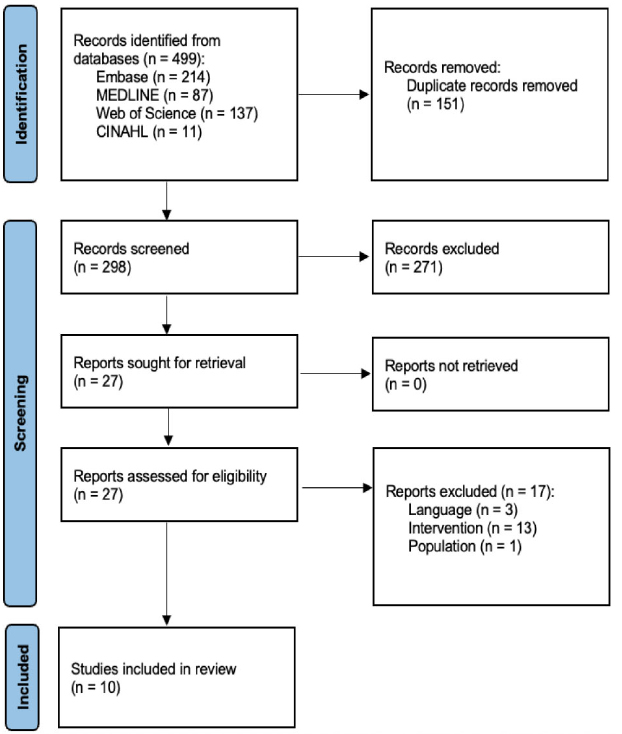
PRISMA flow diagram demonstrating the identification, screening, and inclusion phases of the systematic review.
2.4. Data Extraction and Synthesis
Data extraction was performed independently by two reviewers (SA, FB). Extracted information included authorship, publication year, country of study, study design, and sample size to provide context for each study. Patient details such as age, gender distribution, and comorbidities were also collected, along with intervention specifics, including dosage, comparator groups, and intervention duration, to facilitate interpretation and applicability of the findings to a broader population.
Data synthesis was conducted narratively, following the Synthesis Without Meta-analysis (SWiM) guideline. Study-level risk-of-bias judgements and the certainty of evidence for each reported outcome, rated using GRADE, are summarized in Supplementary Table 3a and 3b, respectively. A quantitative meta-analysis was planned a priori but was not performed because no outcome was quantitatively poolable: for each candidate outcome, at most one study reported data in a compatible format (mean and standard deviation, or a 2×2 comparison against a common comparator), while the remaining studies reported medians and interquartile ranges, used non-equivalent comparators, or applied differing devices, sizes, outcome definitions, and follow-up windows (Supplementary Table 4). Because synthesis was narrative rather than quantitative, no formal power calculation or minimum information size was applicable. The accumulated sample of 3,233 eyes across 10 studies was nonetheless considered sufficient to support a narrative synthesis, in that it spans the clinically relevant contexts in which the device is used (small pupils, pseudoexfoliation syndrome, intraoperative floppy-iris syndrome, and femtosecond laser-assisted surgery), both commercially available ring sizes (6.25 mm and 7.0 mm), and all principal comparators (iris hooks, B-HEX and OASIS expanders, manual stretching, iris radial cuts, ophthalmic viscosurgical devices, and intracameral mydriatics), with consistent directions of effect within each outcome domain. The accumulated sample, however, was insufficient to permit quantitative pooling or to detect uncommon adverse events, and this is reflected in the GRADE ratings and limitations. All p-values reported in this review are those published by the primary studies; no additional statistical testing was undertaken by the review team. Each included study applied the conventional two-sided threshold of p < 0.05 to denote statistical significance, and significance is reported here as designated in the source publications. Any discrepancies in data extraction were resolved through discussion and consensus between the reviewers.
2.5. Risk of Bias Assessment
The risk of bias for studies included after full-text screening was assessed independently by two reviewers (SA, EA). For randomized controlled trials (RCTs), the Cochrane Risk of Bias Tool (RoB 2) was used to assess potential biases across selection, performance, detection, attrition, and reporting [14]. For observational studies, the Risk of Bias in Non-Randomized Studies of Interventions (ROBINS-I) tool was used to assess bias due to confounding, participant selection, intervention classification, deviations from intended interventions, missing data, outcome measurement, and selective reporting [15]. Any disagreements in bias assessments were resolved through discussion and consensus, or by consulting a third reviewer (FB).
3. RESULTS
3.1. Literature Search
A total of 449 publications were identified through comprehensive searches of 4 databases (EMBASE, n = 214; MEDLINE, n = 87; Web of Science, n = 137; CINAHL Plus, n = 11). After removing 151 duplicates, 298 records were screened, of which 271 were excluded. Altogether 27 reports were sought and assessed for eligibility, of which 17 were excluded at the full-text stage: 13 evaluated an intervention other than the Malyugin ring or did not provide extractable Malyugin ring–specific outcomes, 3 were not available in English, and 1 involved an ineligible patient population. A total of 10 studies met the inclusion criteria (Fig. 1).
3.2. Study Characteristics
In all, 10 studies (3,233 eyes) evaluated surgical outcomes with the Malyugin ring (Table 1) [3, 5, 8-12, 16-18]. Sample sizes ranged from 21 to 1,426 eyes, with mean ages 57.6–80 years, consistent with typical cataract populations. Most cohorts included both sexes, except Chang (2008), which enrolled only males [8]. Studies were conducted in Europe (n = 5), North America (n = 3), and Asia (n = 2), and were published between 2008 and 2024. Designs comprised 2 randomized trials, 4 prospective non-randomized studies, and 4 retrospective studies, with earlier reports (Chang 2008; Wilczynski et al. 2013) providing baseline comparisons. The evidence base thus comprised 2 randomized controlled trials (Gupta et al. 2024; Wilczynski et al. 2013) and 8 non-randomized studies, 2 of which (Fay et al. 2014; Hanna et al. 2014) are conference abstracts with limited methodological reporting [8, 9, 12, 17, 18]. This design mix, and the correspondingly mixed risk of bias (low to serious), should be borne in mind when interpreting all comparative findings below.
| Study | Country | Study Type | Study Group | Sample Size (% females) | Mean Age (SD) Years |
|---|---|---|---|---|---|
| Wilczynski et al. (2013) [9] | Poland | Randomized comparative study | Malyugin ring | 23 (65.2%) | 68 ± 13.8 years |
| Manual iris stretching with hooks | 17 (70.6%) | 73 ± 8 years | |||
| Wang et al. (2022) [11] | China | Prospective case-control study | Mechanical manual stretching | 16 (62.5%) | 66.5 ± 12.1 years |
| Iris radial cut | 17 (52.9%) | 58.2 ± 10.4 years | |||
| Iris-retractor hooks | 16 (43.8%) | 57.6 ± 11.3 years | |||
| OASIS iris expander | 18 (55.6%) | 64.9 ± 12 years | |||
| Malyugin ring | 16 (56.25%) | 66.6 ± 9.0 years | |||
| B-HEX Pupil Expander | 16 (56.25%) | 59.8 ± 9.0 years | |||
| Hanna et al. (2014) [18] | USA | Retrospective review | Malyugin ring | NA | NA |
| Iris hooks | NA | NA | |||
| Fay et al. (2014) [17] | USA | Retrospective analysis | Malyugin ring | NA | NA |
| Cataract Surgery without Malyugin ring | NA | NA | |||
| Borkenstein et al. (2018) [16] | Austria | Prospective analysis | Malyugin ring in pseudoexfoliation syndrome (PXF) patients | 28 (67.9%) | 77.9 ± 7.5 years |
| Conrad-Hengerer et al. (2013) [5] | Germany | Prospective clinical trial | Epinephrine | 850 (50.6%) | 73 ± 11 years |
| Visco Mydriasis with OVD | 850 (50.6%) | 73 ± 11 years | |||
| Malyugin ring (7.0 mm) | 850 (50.6%) | 73 ± 11 years | |||
| Chang (2008) [8] | USA | Prospective case series | Malyugin pupil expansion device (5-0 polypropylene) | 21 (0%) | 76.8 years |
| Gupta et al. (2024) [12] | India | Randomized control trial | B-HEX pupil expander | 64 (46.9%) | 70.5 ± 10.12 |
| Malyugin ring | 64 (46.9%) | 70.5 ± 10.12 | |||
| Balal et al. (2021) [3] | United Kingdom | Retrospective case-series | Malyugin ring | 1426 (42%) | 78.6 years |
| Iris hooks | 1426 (42%) | 78.6 years | |||
| Intracameral phenylephrine | 1426 (42%) | 78.6 years | |||
| Nderitu et al. (2019) [10] | United Kingdom | Retrospective case series | Malyugin ring | 135 (43.0%) | 80 years |
| Iris hooks | 45 (47.4%) | 80 years |
Note: *NA: Not Available.
3.3. Safety and Postoperative Outcomes
Safety outcomes for the Malyugin ring were reported across 6 studies (Table 2). In a retrospective case series from the United Kingdom, Nderitu et al. found that the 7.0 mm Malyugin ring was associated with a higher incidence of postoperative inflammation and corneal edema compared to iris hooks [10]. Conversely, Borkenstein et al. conducted a prospective study in Austria involving patients with pseudoexfoliation syndrome and found that the 6.25 mm Malyugin ring was well tolerated, with minimal adverse events [16].
| Study | Country | Pupil Expansion Device | Device Size | Primary Safety Outcome |
|---|---|---|---|---|
| Nderitu et al. (2019) [10] | United Kingdom | Malyugin ring/Iris hook | 7.0 mm (Malyugin ring) | Higher postoperative inflammation and corneal edema with Malyugin ring |
| Borkenstein et al. (2018) [16] | Austria | Malyugin ring | 6.25 mm | Minimal adverse events and safe for patients with pseudoexfoliation syndrome |
| Fay et al. (2014) [17] | USA | Malyugin ring | - | Malyugin rings caused minor endothelial cell density (ECD) loss; they remained within safe clinical limits |
| Wilczynski et al. (2013) [9] | Poland | Malyugin ring/Iris hook | 6.0 mm (Malyugin ring) | Improved surgical ease and functional outcomes with less endothelial cell loss than iris hooks; more pupil ovalization |
| Balal et al. (2021) [3] | United Kingdom | Malyugin ring/Iris hook | 6.25/7.0 mm (Malyugin ring) | Malyugin ring was effective in improving VA; showed a higher rate of iris tears |
| Hanna et al. (2014) [18] | USA | Malyugin ring/Iris hook | - | Malyugin rings achieved faster initial visual recovery; higher incidence of pseudophakic macular edema (PME) |
In the United States, Fay et al. retrospectively assessed changes in endothelial cell density (ECD) and concluded that Malyugin rings caused only minor ECD loss within safe clinical thresholds [17]. Wilczynski et al. similarly found less endothelial cell loss with Malyugin rings than with iris hooks, although more frequent pupil ovalization was observed with the device [9]. In contrast, Balal et al. reported that while Malyugin rings improved postoperative visual acuity, they also demonstrated a higher rate of iris tears relative to iris hooks and intracameral pupil expanders [3]. Hanna et al. found that the use of a Malyugin ring was associated with a slightly increased incidence of pseudophakic macular edema (PME) [18].
3.4. Efficacy of Pupil Dilation and Maintenance
All 8 studies reporting on the efficacy of pupil dilation supported the Malyugin ring’s ability to provide stable, sufficient mydriasis during cataract surgery (Table 3). Nderitu et al. found that the 7.0 mm Malyugin ring minimized the number of corneal incisions required during phacoemulsification [10]. Furthermore, in a prospective case series, Chang reported consistent 6.0 mm pupil dilation and reduced intraoperative complications when using a Malyugin pupil expansive device fashioned from 5-0 polypropylene [8].
| Study | Country | Pupil Expansion Device | Device Size | Primary Efficacy Outcome |
|---|---|---|---|---|
| Nderitu et al. (2019) [10] | United Kingdom | Malyugin ring/Iris hook | 7.0 mm (Malyugin ring) | Malyugin rings reduce corneal incisions required during operation |
| Chang (2008) [8] | USA | Malyugin pupil expansion device (5-0 polypropylene) | 6.0 mm | Maintained consistent 6.0mm pupil dilation and reduced intraoperative complications |
| Conrad-Hengerer et al. (2013) [5] | Germany | Malyugin ring | 7.0 mm | Achieved >5.5 mm pupil dilation; practical control for capsulotomies |
| Borkenstein et al. (2018) [16] | Austria | Malyugin ring | 6.25 mm | Maintain pupil stability in PXF cases; BCVA improved from 0.48 logMAR preop to -0.05 ± 0.13 logMAR post op |
| Fay et al. (2014) [17] | USA | Malyugin ring | - | Consistent pupil dilation with minor ECD loss |
| Balal et al. (2021) [3] | United Kingdom | Malyugin ring/Iris hooks | 6.25/7.0 mm (Malyugin ring) | Efficient pupil dilation in small pupil cases |
| Wilczynski et al. (2013) [9] | Poland | Malyugin ring/Iris hook | 6.0 mm (Malyugin ring) | Significantly better postoperative BCVA with Malyugin (0.75 ± 0.30 vs. 0.56 ± 0.56; p < 0.05) |
| Hanna et al. (2014) [18] | USA | Malyugin ring/Iris hook | - | Faster visual recovery in Malyugin group (LogMAR 0.20 vs. 0.58 at day 1; 0.23 vs. 0.48 at week 1, p < 0.05) |
In a large German clinical trial, Conrad-Hengerer et al. demonstrated successful dilation to >5.5 mm in the majority of SP cases using the 7.0 mm Malyugin ring [5]. Fay et al. corroborated these findings by noting consistent pupil dilation with only minor ECD loss [17]. Balal et al. affirmed the 6.25/7.0 mm Malyugin device’s effectiveness in SP cases, demonstrating efficient dilation across a large cohort [3].
Borkenstein et al. observed maintained pupil stability in cases of pseudoexfoliation syndrome, with a marked improvement in BCVA postoperatively (0.48 logMAR to −0.05 ± 0.13 logMAR) [16]. Similarly, Wilczynski et al. found that Malyugin ring-treated patients had significantly better postoperative BCVA than those treated with iris hooks (0.75 ± 0.30 vs. 0.56 ± 0.56; p < 0.05) [9]. Finally, Hanna et al. reported faster early visual recovery in the Malyugin group at both postoperative day 1 and week 1 (logMAR 0.20 vs. 0.58 at day 1; 0.23 vs. 0.48 at week 1, p < 0.05) [18].
3.5. Surgical Performance and Intraoperative Complications
A total of 4 studies assessed the intraoperative performance of the Malyugin ring (Table 4). In the United Kingdom, Nderitu et al. found that the use of the Malyugin ring during phacoemulsification was associated with shorter operative times than with iris hooks, with operative time also varying by surgeon grade (median 20 minutes for consultants vs. 32 minutes for trainees) [10]. Similarly, Wilczynski et al. reported a shorter mean phaco time in the Malyugin group compared to iris hooks (15.2 ± 3.9 s vs. 19.8 ± 3.1 s; p < 0.05) [9]. In Germany, Conrad-Hengerer et al. evaluated the use of the Malyugin ring in femtosecond laser-assisted cataract surgery. They found that the device enabled adequate pupil dilation in 68% of cases with small pupils, without any reported intraoperative complications [5].
| Study | Country | Pupil Expansion Device | Surgical Technique | Primary Surgical Outcome |
|---|---|---|---|---|
| Nderitu et al. (2019) [10] | United Kingdom | Malyugin ring/Iris hook | Phacoemulsification cataract surgery | Malyugin rings reduced operating times; median operating time: 20 min (consultants) vs. 32 min (trainees) |
| Balal et al. (2021) [3] | United Kingdom | Malyugin ring/Iris hook/IC PE | Phacoemulsification | Higher rate of iris tears in Malyugin group (p < 0.05); overall intraoperative complication rates similar across devices |
| Wilczynski et al. (2013) [9] | Poland | Malyugin ring/Iris hook | Phacoemulsification | Shorter mean phaco time (15.2 ± 3.9 s vs. 19.8 ± 3.1 s; p < 0.05) |
| Conrad-Hengerer et al. (2013) [5] | Germany | Malyugin ring | Femtosecond laser-assisted cataract surgery with phacoemulsification | Enabled adequate pupil dilation in 68% of small pupil cases; no intraoperative complications occurred |
Balal et al. observed that although intraoperative complication rates were generally comparable across Malyugin rings, iris hooks, and intracameral pupil expanders, the Malyugin group experienced a significantly greater rate of iris tears (p < 0.05) [3].
3.6. Comparative Outcomes to Other Pupil Expansion Devices
A total of 7 studies provided comparative analyses of the Malyugin ring and alternative pupil-dilation techniques (Table 5). Nderitu et al. reported shorter surgery duration with Malyugin rings; however, iris hooks demonstrated lower postoperative inflammation and edema [10]. Gupta et al. found that while both the Malyugin ring and B-HEX pupil expander maintained adequate visualization, the Malyugin ring was associated with significantly more pupillary distortion (p = 0.029) [12]. Conrad-Hengerer et al. demonstrated superior dilation success with the Malyugin ring relative to viscoadaptive mydriasis using ophthalmic viscosurgical devices (OVDs) or intracameral epinephrine [5].
| Study | Country | Comparison Device(s) | Findings of Malyugin Ring | Findings of Comparator |
|---|---|---|---|---|
| Nderitu et al. (2019) [10] | United Kingdom | Iris hook | Shorter surgery duration | Lower postoperative inflammation and edema |
| Gupta et al. (2024) [12] | India | B-HEX pupil expander | Maintained sufficient visualization throughout procedure; caused significant pupillary distortion | Less pupillary distortion compared with the Malyugin ring (p = 0.029) |
| Conrad-Hengerer et al. (2013) [5] | Germany | Visco-mydriasis with OVD/epinephrine | Achieved adequate pupil dilation in 68% of small pupil cases; no intraoperative complications | Lower pupil dilation success rates with epinephrine and OVD; some cases required conversion |
| Wang et al. (2022) [11] | China | B-HEX Pupil Expander/OASIS iris expander/Iris-retractor hooks/Iris radial cut/Mechanical manual stretching | Well-preserved endothelial cell density (median postoperative ECD 1961 cells/mm2); good BCVA (median 0.2 logMAR); moderate pupil diameter (median 4 mm); simple operation and good stability | Iris hooks similarly preserved endothelial cell density (2114 cells/mm2); iris radial cut achieved the largest pupil diameter (5.5 mm) but damaged the sphincter; B-HEX less stable; OASIS harder to manipulate; manual stretching had the lowest postoperative density (1452 cells/mm2), indicating greater endothelial cell loss |
| Balal et al. (2021) [3] | United Kingdom | Iris hooks/IC PE alone | Similar visual acuity gains across techniques; higher rate of iris tears (p < 0.05) in Malyugin group | Iris hooks had higher post-op corneal edema, but not statistically significant; IC PE showed no major complications |
| Wilczynski et al. (2013) [9] | Poland | Manual iris stretching with hooks | Better postoperative BCVA (0.75 vs. 0.56; p<0.05); lower endothelial cell loss (9.35% vs. 13.77%; p<0.05); easier surgery | Lower postoperative BCVA and greater endothelial cell loss; less stable dilation (4–6 mm) |
| Hanna et al. (2014) [18] | USA | Iris hook | Faster initial visual recovery (LogMAR 0.20 and 0.23 at day 1 and week 1; p<0.05); PME in 3 cases | Slower initial recovery (LogMAR 0.58 and 0.48 at day 1 and week 1; p>0.05); no PME; similar VA from 1 month on |
Wang et al., in a six-arm prospective case-control study from China, found that the Malyugin ring achieved good BCVA (median 0.2 logMAR), moderate pupil diameter (median 4 mm), and well-preserved endothelial cell density (median postoperative ECD 1961 cells/mm2), whereas manual iris stretching was associated with the lowest postoperative density (1452 cells/mm2), indicating greater endothelial cell loss; the B-HEX and OASIS devices were less stable or harder to manipulate [11]. Balal et al. reported comparable visual acuity improvements across Malyugin ring, iris hooks, and intracameral phenylephrine, though iris tears were more frequent with the Malyugin ring (p < 0.05) [3]. Wilczynski et al. found better postoperative BCVA (0.75 vs. 0.56; p < 0.05) and lower endothelial cell loss (9.35% vs. 13.77%; p < 0.05) with the Malyugin ring than with manual iris stretching [9]. Lastly, Hanna et al. reported that the Malyugin group experienced significantly faster visual recovery than the iris hook group during the early postoperative period, although the pseudophakic macular edema rate was slightly higher [18].
3.7. Risk of Bias Findings
The overall risk of bias across the 10 included studies ranged from low to serious, with most demonstrating either low or moderate risk. Among the two studies evaluated using the RoB 2 tool (Fig. 2), Gupta et al. was judged to have an overall “low” risk of bias [12]. All domains (randomization process, deviations from intended intervention, missing outcome data, outcome measurement, and selective reporting) were rated as low risk, except for the final domain, which was flagged with “some concerns.” Wilczynski et al. was assigned an overall judgment of “some concerns” due to uncertainty in the randomization process and selective outcome reporting [9].
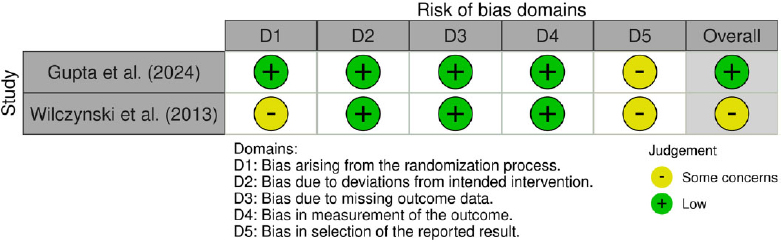
Summary of risk of bias assessment using the RoB 2 tool to evaluate randomized controlled trials across 5 domains: bias arising from the randomization process (D1), deviations from intended interventions (D2), missing outcome data (D3), measurement of the outcome (D4), and selection of the reported result (D5).
The remaining 8 studies were assessed using the ROBINS-I tool (Fig. 3). Wang et al., Balal et al., and Hanna et al. demonstrated consistently low risk of bias across all evaluated domains [3, 11, 18]. Nderitu et al., Conrad-Hengerer et al., and Borkenstein et al. were rated as having a “moderate” risk of bias due to limitations in confounding and participant selection [5, 10, 16]. Chang and Fay et al. were judged to be at “serious” risk of bias; for Chang this was largely due to serious concerns regarding confounding, whereas Fay et al. raised concerns about both confounding and participant selection [8, 17]. A study-level risk-of-bias summary is provided in Supplementary Table 3a. Applying GRADE, the certainty of evidence was low to very low for all reported outcomes, driven principally by risk of bias and imprecision (Supplementary Table 3b); this is reflected in the consolidated outcome summary (Supplementary Table 5) and is carried forward into the Discussion.
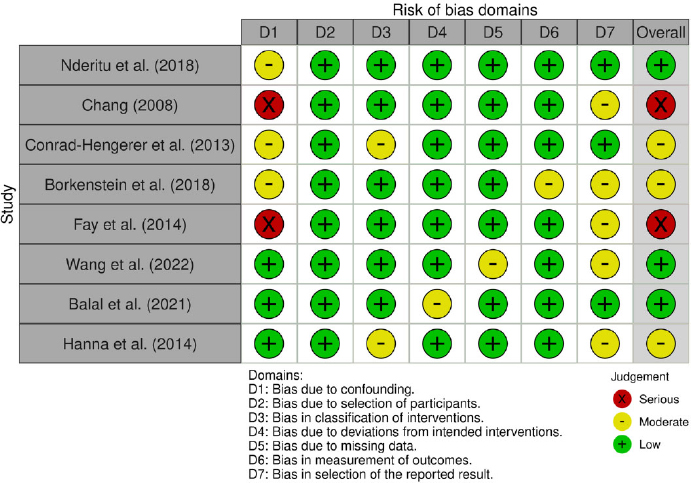
Summary of risk of bias assessment using the ROBINS-I Version 2 (2024) tool, evaluating study quality across 7 domains: confounding (D1), classification of interventions (D2), selection of participants into the study (D3), deviations from intended interventions (D4), missing data (D5), measurement of outcomes (D6), and selection of the reported result (D7).
4. DISCUSSION
The Malyugin ring appears to maintain a generally favorable safety profile in the available studies, with complications such as iris tears and postoperative pupil ovalization reported infrequently and, where they occurred, typically not visually significant [3, 9, 10, 16-18]. Studies such as those by Borkenstein et al. support its safety in complex cases, including those with pseudoexfoliation syndrome [16]. However, the slightly higher incidence of iris tears compared to other devices, as noted by Balal et al., highlights the importance of precise positioning and careful handling during surgery [3]. Malyugin ring use was associated with limited endothelial cell loss, and several studies reported lower corneal endothelial cell loss than comparators such as iris hooks and iris radial cuts. This protective effect likely stems from the Malyugin ring’s distributed, gentle stretching mechanism, which minimizes mechanical trauma during surgery. These findings provide further support for the safety of Malyugin rings for corneal health, particularly in high-risk patients requiring endothelial preservation [17].
Malyugin ring use was associated with reduced operating times in several studies, suggesting a favorable efficiency profile [3, 5, 9, 10]. Its ease of insertion and ability to maintain stable pupil dilation without frequent adjustments make it particularly suited for routine cases. Shorter procedures not only reduce surgeon fatigue but also lower the risk of intraoperative complications associated with prolonged operating times, such as corneal endothelial cell loss or increased inflammation [19-22]. This efficiency is particularly advantageous in high-volume surgical centers or resource-limited settings where optimizing throughput without compromising safety is critical [21, 23].
Malyugin ring use was associated with favorable visual outcomes, including significant improvements in BCVA and faster recovery than iris hooks, across studies [3, 5, 8-10, 16-18]. These outcomes, coupled with its favorable safety and efficiency profile, reinforce the Malyugin ring as a reliable and effective device for managing small pupils in cataract surgery. However, Malyugin rings exhibit lower postoperative retention of pupil shape compared to alternatives such as the B-HEX ring [11]. This difference, while statistically significant, does not appear to affect functional outcomes. This aligns with the minor postoperative ovalization observed by Wilczynski et al., which appears to have no lasting clinical impact [9].
The advantages and disadvantages regarding surgical efficiency and pupil shape retention highlight the importance of tailoring device selection to the individual patient's needs and the surgical context. For routine cases or those involving small pupils, the Malyugin ring’s efficiency makes it a preferred choice. In contrast, for cases where postoperative pupil aesthetics are a priority, such as in younger patients or those with specific cosmetic concerns, devices like the B-HEX ring may be more suitable.
A plausible device-mechanics explanation for the favorable metrics of the Malyugin ring is its square, four-point engagement of the pupillary margin, which maintains a stable circular aperture under low, evenly distributed tension. Compared with point-loading of individual iris hooks, this distributed hold may reduce localized sphincter microtrauma and iris chafing, which could, in turn, underlie the lower endothelial cell loss and shorter phacoemulsification times reported with the ring. This remains a mechanistic hypothesis rather than a demonstrated causal pathway, and should be tested directly in adequately powered comparative studies.
Because no outcome was sufficiently comparable to pool quantitatively, subgroup effects are described narratively. By ring size, the 7.0 mm ring was used in larger or more atonic pupils and the 6.25 mm ring in pseudoexfoliation and standard small-pupil cases, with adequate dilation reported across sizes [3, 6, 10, 16]. By surgery type, efficacy was reported in both standard phacoemulsification and femtosecond laser-assisted cataract surgery, where the ring achieved adequate dilation in 68% of small-pupil cases without intraoperative complications [5]. By population, benefit was reported in small pupils, pseudoexfoliation syndrome, and intraoperative floppy-iris syndrome [8]. The protocol prespecified an adult population and excluded pediatric patients; therefore, evidence-based conclusions regarding pediatric cataract surgery cannot be drawn, and this represents a priority for future research.
Where a higher rate of iris tears with the Malyugin ring was reported, the risk may be mitigated intraoperatively by fully unfolding and centering the ring before manipulation, engaging all 4 scrolls squarely on the pupillary margin under an ophthalmic viscosurgical device, avoiding over-stretch in fibrotic or pseudoexfoliative irides, and disengaging and removing the ring before withdrawing the phaco tip [3]. Balanced against this, the direct comparative evidence is mixed: in one study, iris hooks were associated with higher postoperative anterior uveitis and corneal edema than the ring, so device choice should weigh both intraoperative and postoperative complication profiles [10]. Pharmacologic mydriasis remains a complementary first-line strategy: a systematic review of intracameral epinephrine reported effective, well-tolerated dilation during cataract surgery, supporting a stepwise approach in which pharmacologic agents are attempted first, and mechanical expansion is reserved for eyes in which pharmacologic dilation proves inadequate [24].
4.1. Strengths and Limitations
This systematic review provides a structured synthesis of the efficacy and safety of Malyugin rings as a pupil expansion device in cataract surgery. The review followed the PRISMA guidelines and employed a dual-reviewer process for study selection, data extraction, and risk of bias assessment, thereby reducing selection and reporting biases. Risk of bias was rigorously assessed using both the RoB 2 tool for randomized controlled trials and the ROBINS-I tool for observational studies, increasing the credibility and transparency of the findings. Additionally, including studies across a wide range of countries and surgical contexts enhances the external validity of the results. Many of the included studies were prospective in design, allowing for more consistent data collection and minimizing recall bias.
This review has several limitations. Considerable heterogeneity was observed across studies, particularly in terms of surgical technique, device size (6.25 mm vs. 7.0 mm), comparator interventions (e.g., iris hooks, B-HEX, OVDs), and outcome measures such as BCVA, endothelial cell loss, and surgical time. The inclusion of both randomized and non-randomized studies introduced methodological heterogeneity that may affect the strength of our conclusions. Finally, some studies lacked complete reporting of key variables such as gender distribution, follow-up duration, and surgeon experience, which may introduce residual confounding. In addition, 4 additional limitations warrant emphasis. First, no outcome could be quantitatively synthesized: reporting was heterogeneous (means with SD versus medians with interquartile ranges), comparators were non-equivalent, and outcome definitions and follow-up windows differed; therefore, only a narrative synthesis was possible, and certainty of evidence was low to very low across outcomes (GRADE). Second, follow-up was short and heterogeneous across studies (predominantly ≤1 month, with only a subset reporting to 3–6 months), precluding conclusions about long-term endothelial, refractive, or pupil-shape outcomes. Third, although no language restriction was applied at the search stage, English-language eligibility at the full-text stage resulted in the exclusion of 3 records. As only 3 records were excluded on language grounds, the likely impact on the conclusions is small; however, language bias cannot be completely excluded. Fourth, 2 included records are conference abstracts with limited methodological detail, further weakening the evidence [17, 18].
CONCLUSION
The Malyugin ring appears to offer advantages in surgical efficiency, safety, and early postoperative outcomes; however, on the predominantly non-randomized evidence available, definitive superiority over alternative expansion devices is not established, and its limitations in certain respects, such as postoperative pupil-shape retention, indicate that device selection should be tailored to the specific needs of each case. Future studies exploring long-term outcomes and broader comparisons with emerging technologies like the B-HEX ring would further refine its role in cataract surgery.
AUTHORS’ CONTRIBUTIONS
The authors confirm their contributions to the paper as follows: S.A.A.-B., F.B., C.M.L.H., and M.S.M.-M.: Study conception and design; S.A.A.-B., F.B., J.B.W., and E.A.: Data collection; S.A.A.-B., F.B., A.X.G., C.M.L.H., and M.S.M.-M.: Analysis and interpretation of results; S.A.A.-B. and F.B.: Draft manuscript preparation. All authors reviewed the results, critically revised the manuscript, and approved the final version of the manuscript.
LIST OF ABBREVIATIONS
| BCVA | = Best-Corrected Visual Acuity |
| ECD | = Endothelial Cell Density |
| ECL | = Endothelial Cell Loss |
| FLACS | = Femtosecond Laser-Assisted Cataract Surgery |
| GRADE | = Grading of Recommendations Assessment, Development and Evaluation |
| IC PE | = Intracameral Phenylephrine |
| IFIS | = Intraoperative Floppy-Iris Syndrome |
| IOP | = Intraocular Pressure |
| logMAR | = Logarithm of the Minimum Angle of Resolution |
| OVD | = Ophthalmic Viscosurgical Device |
| PCR | = Posterior Capsule Rupture |
| PME | = Pseudophakic Macular Edema |
| PXF | = Pseudoexfoliation Syndrome |
| RCT | = Randomized Controlled Trial |
| RoB 2 | = Cochrane Risk-of-Bias tool version 2 |
| ROBINS-I | = Risk Of Bias In Non-randomized Studies of Interventions |
| SP | = Small Pupil |
| SWiM | = Synthesis Without Meta-analysis |
AVAILABILITY OF DATA AND MATERIALS
All data supporting the findings of this article are available within the published article and its supplementary materials. No separate dataset was generated or deposited in an external repository.
ACKNOWLEDGEMENTS
This work was supported by the Pragmatic Trials Training Program, Western University, Canada.